


Ultra-Convenience & Immediate Gratification are the Bars of the Prison We're In. 5 Ways To (Really) #Resist

Updated: Dec 1, 2025
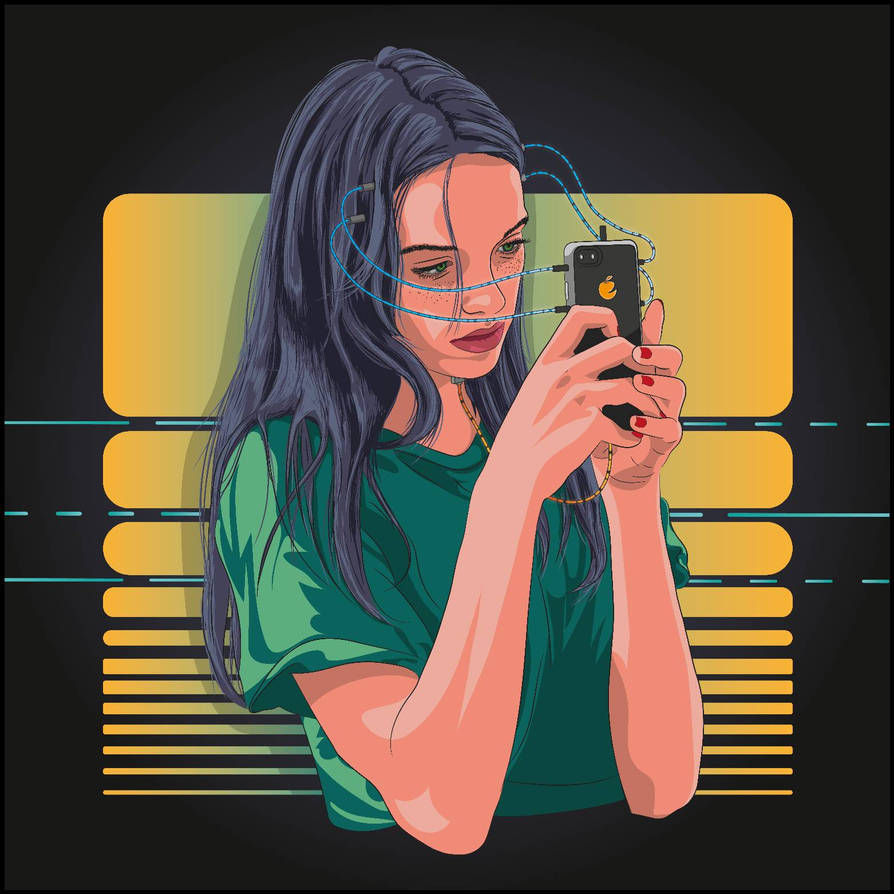
The surveillance state of 2025 depends not on spies, warrants, and courts of law, but on the willing participant who is addicted to giving all of their data away—via apps, social media, rewards programs, shopping records, endless accepted terms and conditions clauses, and the always-on, always-listening smartphones in their back pockets.
A Thought Experiment
Imagine it's the 90s. Tupac is on the radio. Your pants are baggy as hell and possibly unflattering. Cell phones are big, clunky, and usually found in the center consoles of luxury cars or in the hands of wealthy businesspeople. You drive a Buick, and you're not a drug dealer or doctor, so you don't have a pager, either. You carry around a tape recorder with you that is always recording, and your home and work phones are also bugged. Every month, several corporations and government agencies collect all of your recordings, plus recordings of when you watched tv or movies and what you watched. The stores you shop at give you occasional discounts in exchange for storing a record of everything you purchase and sharing it with the previously mentioned entities. Every time you are shopping, stores film everything you look at, touch, or buy— and store that information to use and to sell. Also, everything anyone else says about you in public is recorded. Even if you go out of your way to whisper or to have a private conversation, they are all still listening. You're living in a dystopia of 1984* proportions.
* "Nineteen Eighty-Four (also published as 1984) is a dystopian novel by the English writer George Orwell. Thematically, it centers on totalitarianism, mass surveillance and repressive regimentation of people and behaviors."
—Wikipedia
Fast forward to 2025. It is the exact same situation, except for one thing—you chose most of it. I admit, even if you were completely unplugged, you would still most likely be around people who have phones. You'd still be watched in certain stores and businesses. However, it would be nothing compared to the surveillance shitstorm we're stuck in right now. In the name of convenience and instant gratification, we give our rights away, every single day. Look through your apps on your phone. Every single app we use is either a shortcut, a tool that makes things more convenient, or something that offers (or promises) instant gratification. Why cultivate new friendships and maintain old ones in person when you can just post photos and videos that make you look good and avoid any real interaction? Why look for a movie to watch when your streaming service is already recommending a bunch to you?
But is it even worth it?
If you look around at the situation we're in (with surveillance), it may look hopeless. After all, how could we possibly get out from under the thumb of all of these entities scrambling to gather, store, and build profiles based upon every surveilled aspect of our minds and lives? Here are some ideas.
5 Ways to Fight Back Against Surveillance
Choose Privacy-Focused Messaging. The most popular apps that are (supposed to be) private and encrypted are Signal and WhatsApp.
Whatsapp was purchased by Meta (Facebook) in 2014, so any privacy you thought you had on Whatsapp is out the window, unfortunately.
Signal is considered the gold standard by many for private messaging, but its security (and privacy) has been called into question, due to a couple of factors. First, because Signal's servers are based in the US, they are dependent on infrastructure owned by Google, Amazon, and Microsoft. Signal can also be forced to hand over data that at least shows how often and at what times we use the app. In addition, because of requests from other governments, Signal has had already agreed to block accounts linked to “illegal activities”. On top of everything, the U.S. government has acquired a tool that can break into Signal as of this past spring. However, for most people, Signal can still be a viable private option.
Enter Threema. Threema is a Swiss app, and is fully hosted in Switzerland. It is completely anonymous, not even requiring a phone number or email to register. There is a one-time fee of $6, messages are only stored on your device (not in a server), it is fully encrypted and decentralized, and it doesn't even need to access your contacts. The Swiss military officially issued a recommendation for Threema due to concerns about U.S. surveillance. The way Threema is built also ensures that even governments can't get to your data (court orders or not).
Briar is an extremely secure messaging app that is better as an emergency/shit-hits-the-fan solution. Great for countries that have gone into full martial law or are completely chaotic and unstable, disasters, or times with prolonged internet/power outages. Unlike all of the options on this list, Briar doesn't even require central servers, but syncs directly via WIFI or Bluetooth. when an internet connection is available, it uses the TOR network for complete user anonymity. Briar is an app that should be installed now for "just in case" scenarios like the ones listed above.
Switch to a Dumbphone with Private Messaging. This is even better than using a regular phone, because you get rid of all the ads, apps, and other junk that can be used for data-sharing and surveillance. Unfortunately, only one phone currently fits the bill. The Punkt MP02 phone is a minimalist phone that comes with Signal messaging, texting, calling, and Wi-Fi tethering. That's it. I've been waiting for this phone to go down in price for years, and it finally has, so this might be my next phone. At $299, it's fairly affordable, and even though you can't get other apps (like Threema or Briar), it more than makes up for it with the wasted time you'll save and the data that you will no longer be giving away with phone apps.
Unplug. Believe it or not, it is still possible to unplug completely, whether it's just from smartphones, or the whole shebang. Check out the related posts below for some ideas.
Shop Locally. As a rule. Put your money where your house is. :) If you pivot from giving all of your money to faceless corporations to investing in your community by shopping locally, you win on many fronts. First, those small local businesses probably don't have fancy-schmancy surveillance tech like facial recognition (this is becoming really common). Second, you can help your local economy thrive, which is good for everyone who lives there (and your bank account). If you live in a small town, this may not be possible; in that case, buy as much as you can locally and stick to independent stores for your online shopping (so, no more Amazon, Walmart, Wayfair, etc.).
Foil Facial Recognition. Even if you leave your phone at home, the facial recognition that many stores utilize is able to pinpoint your location. I use Zenni glasses with Zenni ID Guard™, which blocks most facial recognition (as long as it is based on infrared technology, which a larger percentage is). Of course, if you have your phone on you while you shop, corporations, the government, and more will know when you stop in front of certain products , what part of the store you spend the most time in, and more, just filling in the blanks in the personality profile created by your technological footprint.
Although it might not be possible to to drop off the radar completely (or to erase the data and information they already have on us), we can make better choices moving forward to keep as much of our data private as we can— and at the same time, reclaim our minds from the entities that have been muddying them for so long.


