


We Are Ecosystems, Not Individuals: Why Every Part Matters
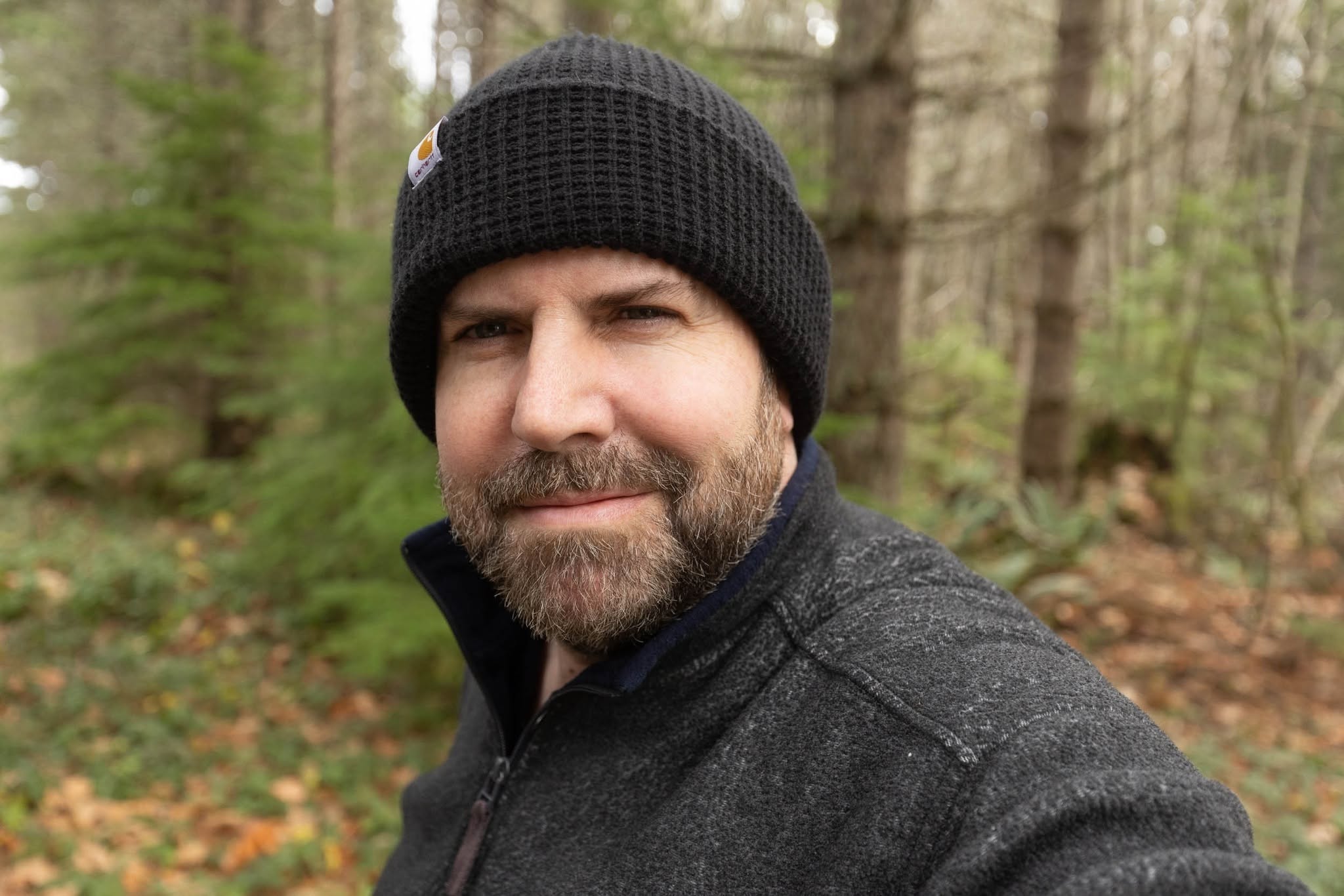
by Justin McAfee
Industrial civilization teaches a simple story: you are an individual. Self-contained. Self-sufficient. A single, bounded unit moving through a world of other bounded units. This is the myth that underwrites everything… capitalism, productivity culture, the cult of personal branding, even the way we imagine “nature” as a scenery of separate objects.
But step outside at dawn and watch a bird for three seconds. The goldfinch flashing across my yard this morning was not “one bird.” It was a node in a living web: the seedheads it feeds on, the insects those seeds rely on, the soil that feeds the plants, the mycelial networks beneath that soil, the migrating patterns shaped by ancestral winds. That one bird is a choreography of relationships moving as a single body.
Modern culture calls that an individual. Life calls it a constellation.
Every living thing (including us) is a process, not a unit. A relationship, not an object. An ecosystem, not a self. And nothing makes that clearer than the new research showing how quickly ecosystems collapse when we pretend otherwise.
What New Science Shows About Birds
A new global study published in Nature analyzes 3,696 bird species across 1,281 sites, revealing something profound: when we alter land, turn forests into fields, fields into pastures, pastures into suburbs, we don’t just lose species. We lose the redundancy that makes ecosystems resilient.
Functional redundancy is the ecological equivalent of a safety net. It means there are multiple species capable of fulfilling similar roles… like dispersing seeds, controlling insects, recycling nutrients, pollinating plants. Redundancy is the ecosystem’s “insurance effect,” the buffer that allows life to absorb shocks, disturbances, and even extinction events without collapsing.
The study finds that in human-modified landscapes such as cropland, pasture, and urban areas, functional redundancy collapses sharply, even when the total number of species looks superficially “fine.”
This means the ecosystem becomes brittle. Fragile. Less able to handle further stress.
One additional extinction can send functional diversity plummeting, especially in the groups that matter most:
• frugivores, the birds who disperse seeds and regenerate forests• invertivores, the birds who control insect populations
These species form the metabolic organs of ecosystems. When they go, systems don’t decline gradually… they fall off cliffs.
And here’s the devastating twist the paper makes clear: even when disturbance-tolerant species increase, they do not replace the sensitive ones in any meaningful functional way.
Ecosystems don’t need more birds; they need the right ones. They need the relationships those birds hold open through their bodies.
This is the scientific articulation of what indigenous people and deep ecologists have been saying for decades:
Life is not a heap of parts. It is a web of roles. Living functions that cannot simply be swapped out like components in a machine.
We Are Ecosystems Too
This is where the science becomes a mirror.
What happens in forests is a reflection of what happens in us. We are not discrete units any more than a forest is. We are ecosystems. Multispecies, multi-relationship, multi-layer beings whose stability depends on redundancy, diversity, and relationship.
Our bodies contain more non-human cells than human ones!
Our microbiome governs immunity, digestion, mood, even identity formation. Relationships shape our nervous systems. Communities shape our possibilities. Landscapes shape our emotional weather.
The “individual” is a marketing myth. A human is a watershed wearing skin.
Industrial society isolates us, and calls that isolation normal.
The same cultural logic that strips forests, grassland and wetlands into monocultures strips people into units of labor and consumption. We lose the redundancy of community, the diversity of roles, the comfort of interdependence.
We become brittle.
Just as ecosystems collapse when they lose functional diversity, humans collapse when our relational webs diminish. Depression, anxiety, burnout… these are symptoms of a species ripped from its ecological context.
Civilization’s Fatal Assumption: Interchangeability
The machinery of industrial society operates on a single metaphysics: everything and now everyone can be replaced.
If a species disappears, another will “fill its role.”If a worker burns out, another can be hired.If a river is poisoned, another watershed can be tapped.If a community dies, a new development can be built.If a culture collapses, a new one can be marketed.
Civilization treats living systems the way it treats supply chains.
But the extinction curves in the paper don’t care about economic theory. They show the reality of living systems: once redundancy is gone, collapse accelerates.
Life doesn’t swap roles like interchangeable parts in a factory.
Each Being Is a Relationship
Here is the truth the science gestures toward but cannot say aloud:
Life is relationship.Life is role.Life is reciprocity.
A forest isn’t a collection of trees. Birds aren’t just “species,” they’re the movement of nutrients, the dispersal of futures. Rivers aren’t “resources.” They’re the bloodstreams of worlds.
And a human is not an isolated self. A human is a field of relationships shaped by land, ancestors, microbes, seasons, stories, and other beings.
The Nature study reveals the structural skeleton of this truth: species maintain the world through their functions, not through their numbers.
This is why intact ecosystems are irreplaceable. And why intact cultures, ones still rooted in land, ritual, kinship are irreplaceable too.
Everywhere I go, I meet people who feel lost and don’t know why. And I want to tell them: It’s not that you are lost. It’s that you were severed from the web that made you.
Where Is Your Own Redundancy Diminishing?
I think often about the kinds of redundancy that once held me. The friends I saw weekly without scheduling, the older men who taught me how to mend things, the women who taught me how to listen, the neighbors who watched out for each other, the land that taught me how to breathe.
All of that is disappearing, just like the frugivores.
And I feel the brittleness in myself when those relationships fade. I feel my inner ecosystem losing its buffers. I feel how one more disruption, one more stress, one more loss lands harder now than it would have years ago.
We humans are not as different from birds as we like to imagine. We are losing the diversity of relationships that make us resilient. We are losing the people who performed irreplaceable roles in our lives. We are losing cultural functions that anchored us… like rituals, place-based knowledge, communal meaning, shared skill.
Restore Relationship, Restore Life
If collapse is the unraveling of relationship, then regeneration begins with reweaving those relationships.
This article was republished with permission from the author, and was originally published at https://collapsecurriculum.substack.com/p/we-are-ecosystems-not-individuals

About the Author:
Justin McAfee
Biocentric provocateur and wilderness survival instructor, dissecting the unraveling of industrial civilization and illuminating radical pathways to ecological restoration. Incisive, irreverent, Earth-first. He is currently deep into research for his upcoming chapters of his new book (available soon on his Substack) that will go deep into real answers and foundational worldviews about repairing our individual and collective ecosystems. He is working hard to center wisdom and worldviews known to indigenous land-based cultures. They remember what much of the human family has forgotten. He promises it to be a revealing and transformative guide for anyone reading.


